Tuesday, June 21, 2011

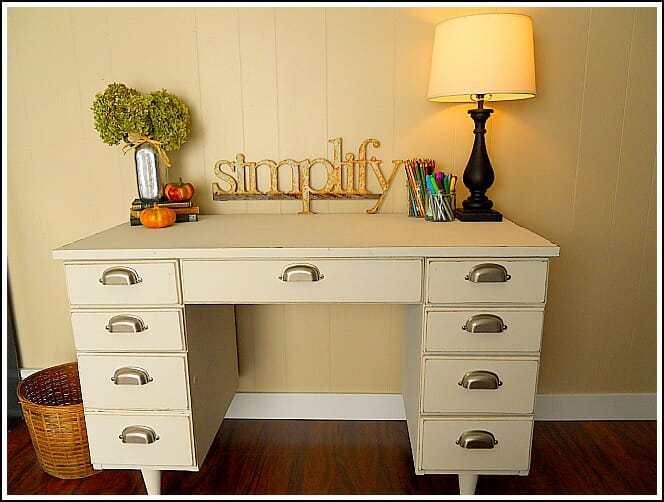
5 Items to Remove From Your Desktop


Flat surfaces seem to be magnets for piles of miscellaneous items.  Kitchen tables, tops of dressers, that chair in the foyer, and even your desk (!) can accrue "stuff" that really doesn't belong there.  Since it's my mission to help people organize their office spaces, here are 5 simple suggestions to help you get started on yours.
Begin by removing unnecessary items from your desktop, such as:
  1. Things you do not use on a daily basis.  Keep the phone, computer, planner, stapler, a couple of pens, etc. but remove the rest.
  2. Junk mail.  If you're not in the habit of sorting through your mail on the day you receive it, then get in the habit!  Immediately throw away any ads, coupons, credit card offers you know you won't use.
  3. Outdated materials.  This includes notes from seminars or meetings, old brochures, ancient business cards, etc.  Anything with an expiration date that's passed, throw it out!
  4. Knick-knacks and other companies' promotional items.  I know, you need the stress ball with your insurance agent's logo on it, but do you really need 6 of them?  I think not.  The ceramic angel you don't want to get rid of because your co-worker gave it to you 2 Christmases ago--remove it from your desktop!  You probably don't even like angels.
  5. And finally, trash.  So obvious, I know, but I wouldn't have this on the list if it wasn't happening.  Don't leave empty candy and snack wrappers on your desk.  Throw away the mostly empty Starbucks cup from last week.  Same goes for any half-eaten food (ick.).  Throw the trash away.
Take a moment to really look at your desktop now.  Are there any of the items from the list on it?  A cleared off desktop is a wonderful thing!  There will be less to distract you so you can focus on doing your best at work.  Short on time?  Tackle one of these a day and you'll have a "new" desk in only 5 days!  Get started, and good luck.

Tuesday, June 7, 2011

Causes of Disorganization


What really causes some people to be more disorganized than others?  As it turns out, there are many reasons why some struggle more with becoming and staying organized.  Here are a few of the causes:
  • Environmental circumstances such as lack of storage space, inconvenient traffic flow, unpleasant work area
  • Systemic factors, meaning trying to follow an overly complicated system, or one that is difficult to implement, or even having no system at all 
  • Mental health issues such as depression, anxiety, avoidance disorder, obsessive compulsive disorder, and compulsive hoarding
  • Physical challenges: impaired mobility, sleep disorders, and poor vision
  • Beliefs and attitudes: "I'm a procrastinator--always have been, always will be." Also, the fear of being judged harshly by others. 
It's important to empathize with people struggling with chronic disorganization instead of judging harshly right away.  We never know what others are dealing with in their lives.

(source: NSGCD, Fact Sheet by Phyllis Flood Knerr)

Friday, May 13, 2011

5 Quick Tips to Declutter Your Office

Clutter. Ick. How does it appear, and why can't we seem to get rid of it once and for all?  We can!  With these tips and a bit of discipline (try it, it's not so bad), we can learn to control clutter and maintain a neat and orderly office space. 
  1. Tackle one small area at a time.  Start with a desk drawer, or even a section of it.  The benefits of starting small are twofold: working on a small space allows you to see results instantly, and the time commitment is minimal.  Ten minutes here and there adds up.
  2. Organize when you clean.  Cleaning and organizing are not the same, although the two are sometimes lumped together.  While you're dusting is a great opportunity to toss out or relocate items that are no longer useful to you, or that have strayed from their assigned home.  Putting things where they belong not only helps you get organized, it's less you have to dust around.  Yay!
  3. Purchase organizing products only if you know what you're going to use them for.  Yes, I too have been guilty of buying a tool at Office Max not because I really needed it, but because it was so cute!  Stop that.  I have broken myself of this habit, so don't convince yourself that the pretty box with the beach scene will solve your organizing challenges.  The only way to solve them is to declutter your space and implement a system that is simple and logical for you.
  4. Don't be shy about using empty wall space or the back of your office door for storage of items you use but don't need to access every day.  Look in office supply stores and online for a myriad of choices in this area.  It's ok to keep items if you use them--this is not clutter, but make sure each item has a permanent home in your office.
  5. Set aside time each day to declutter until it's done.  Don't be tempted to dump stuff into a box in the corner of your office in the hopes that you'll get to it soon.  No, you probably won't.  The best way to declutter is to start small (see Tip #1!) and to keep going until you're happy with your space.


Tuesday, May 10, 2011

Want to Increase Productivity? Leave Your Office!

beverages,buildings,cafes,coffee cups,coffee shops,coffees,drinks,food,Photographs,windows

 
Have you ever noticed that offices can be distracting places?  Kind of like the hospital--just when you get relaxed and are about to drift off to sleep, someone barges in and you have to start all over again.  Most offices are teeming with interruptions just waiting to happen: co-workers who stop by for "a minute" to chat, ringing phones, it's too chilly (or hot) which makes it hard to focus, worrying about those piles of papers that are lurking in your peripheral vision, hearing the details of your co worker's cousin's (boring) wedding...distracting! 
I work from a home office when I'm not in somebody else's office helping them get better organized.  My office is in a separate room in the lower level of my house, and while I don't have any motor-mouth co-workers popping by, there are still distractions I have become disciplined to work around.  But for those times when I succumb to interrupting what I'm working on to go throw that load of laundry into the dryer, I've found that going to a coffee shop or bookstore to work actually works remarkably well.  Although there are people and noise in these places, I'm able to have laser-like focus and I wind up being highly productive!  Then I can go home and not feel as guilty about taking care of some household duties during my workday.  If you occasionally struggle with inefficiency at work, go work off site for a couple of hours.  A change of scenery is good for you--and your productivity!

Monday, April 18, 2011

Reference Lists--They're Great!

Do you have a mental list of things you want to do, start, finish or just keep track of?  Sometimes these things don't always fit the criteria for being included in your everyday To Do List, so they kind of float around hoping you'll remember them at the time that you actually need them.  Yeah, right. 

Suggestion:  create a Reference List folder on your computer.  Possible categories to include there are:  Favorite Restaurants or Restaurants to Try (for those times you want to go out but can't think of anywhere to go!), Websites to Check Out, Books to Read, Gift Ideas for Others, Gift Ideas for Me (when others ask what you want for your birthday, now you can check your list!), Birthdays, Personal Goals and Dreams, Places to Travel...this list of lists can go on and on.  Clear your mind by doing this, and have fun!
Paris skyline
  

Thursday, April 14, 2011

3 Quick Tips to Get Through a Pile of Papers!

view details
Ever feel like you'll never get through that pile of paper on your desk?  It's one of the most dreaded tasks in your office, probably.  And if you don't deal with it, it just gets bigger and bigger.  Well, time to tackle your worst office fear!  Here are 3 tips that will make plowing through your paper piles easier:
  1. Starting from the top of the pile, pick up each item and if it's trash, shred or recycle it.  If you need to keep it, decide where it goes and put it there.  Does it need to be filed?  File it now.  Is it something for a coworker to handle?  Delegate it now.   If it's an old magazine or newspaper, be honest with yourself about the likelihood of actually reading it.  If you know you're not going to, let it go.
  2. As you're sorting through the papers, categories may emerge.  That's good!  If there are several papers pertaining to the same topic, keep them together until you get through and deal with them all at once. 
  3. After you've filed, tossed, and delegated as much as possible, with what's left you can create a permanent home for each remaining category of items depending on what they are and how often you'll need to access the information.  It's ok to create a temporary file for tasks that will have a definite ending, as opposed to ongoing projects that will need a permanent file.
These are quick tips to help you clear off your desk a bit and to help you move through your paper piles.  It's possible that one of these days you'll want to seriously evaluate your workflow system and filing system to see if there are ways to become more efficient and productive.  Most people can benefit from improving their office organization, even if it's just a little bit.  After all, if you're not well organized, then the likelihood of the dreaded paper pile returning is pretty good. 

Wednesday, April 13, 2011

Five Uncommonly Known Causes of Disorganization

Many people who struggle with chronic disorganization feel bad about themselves because they think they should be able to get organized easily.  Some believe, or think that others will believe, that they aren't smart, or that they're just lazy and that's why they're struggling to get organized.  Not so at all!  Here are 5 reasons why you or someone you know may struggle with disorganization...so be understanding of yourself and others.  You may not know what others in your life are dealing with.
  1. Life crises: health emergency, death of a loved one, job loss, trauma
  2. Transitions: frequent moves, birth or adoption of a child, divorce
  3. Beliefs/Attitudes: "I am a procrastinator--always have been, always will be", fear of being judged harshly by others
  4. Mental Health Issues: depression, anxiety, obsessive compulsive, hoarding disorder
  5. Ineffective Beliefs About Possessions: valuing objects unrealistically, associating possessions with one's identity
Source: National Study Group on Chronic Disorganization, Facts by Phyllis Flood Knerr